A Primal and Biophilic Connection
26th October 2026
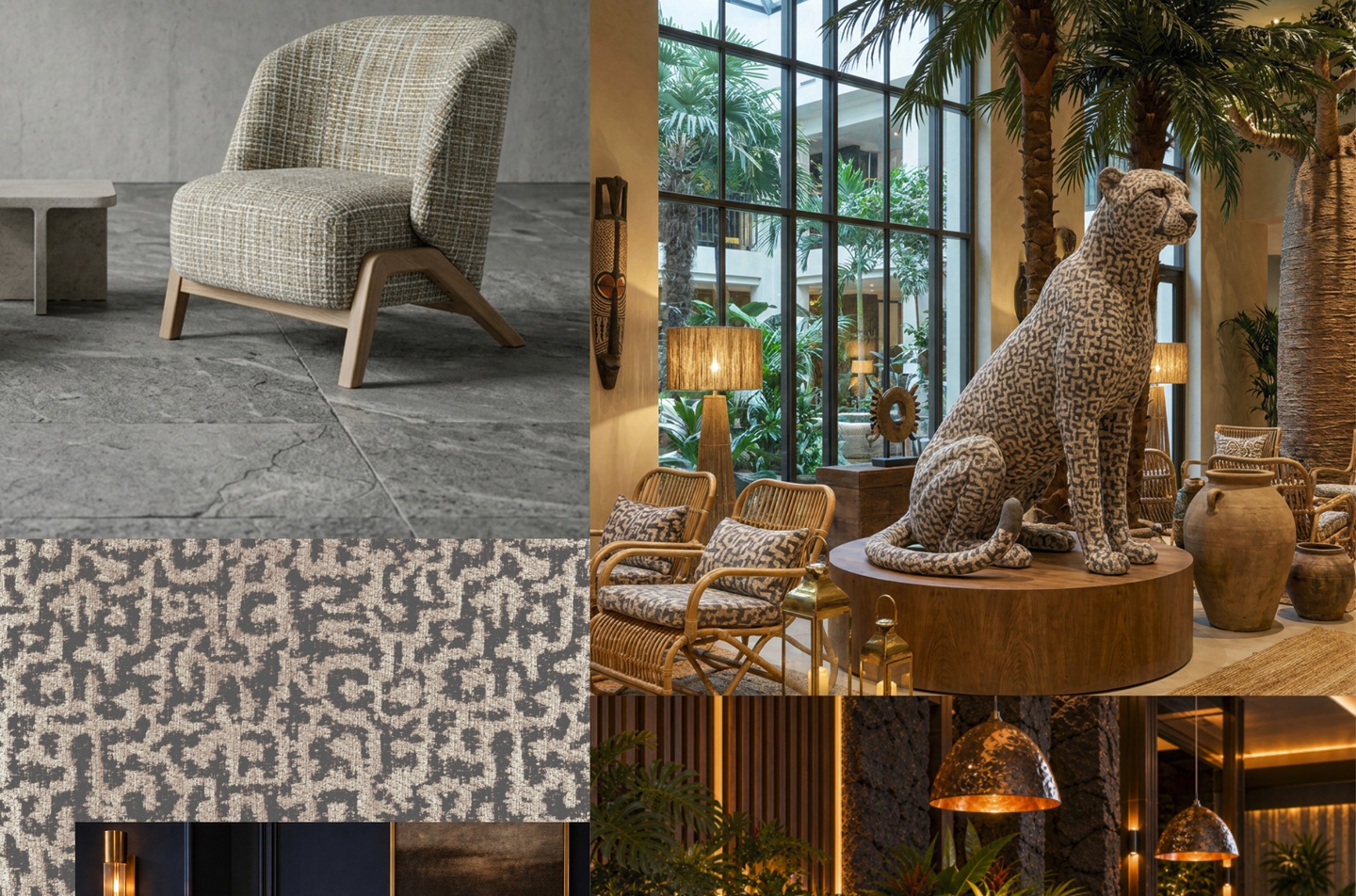
Humans have an evolutionary and emotional response to animal forms, movement and silhouettes. Even abstract outlines that echo a wing, a posture or the markings of a skin or hide can introduce a feeling of life and movement, preventing an interior from becoming overly sterile or static.
Textures Associated with the Natural World
Fabrics with natural irregularities, particularly those associated with organic forms, can help soften and break up spaces dominated by the rigid, straight lines and flat surfaces commonly found in modern architecture. Naturally derived textures provide an antidote to monotony, introducing movement and unexpected focal points without relying on a bold colour palette. Designs which maybe have a resemblance to classic animal-skin designs, particularly leopard and subtle hide textures, can sometimes even be treated as neutrals. Their mix of earthy browns, tans and blacks allows them to sit comfortably alongside stripes, block colours and florals, bringing another layer of depth and interest to a scheme.
A Primal and Biophilic Connection
Humans have an evolutionary and emotional response to animal forms, movement and silhouettes. Even abstract outlines that echo a wing, a posture or the markings of a skin or hide can introduce a feeling of life and movement, preventing an interior from becoming overly sterile or static.
Wildlife motifs, feathers and botanical-animal hybrids can also satisfy our desire to reconnect with nature indoors. Much like introducing houseplants, natural wood grains or the texture of bark, patterns and surfaces that resonate with living things can help bring a space to life.
Unlike more generic geometric patterns, different animal motifs can carry their own distinct associations. Big-cat references can introduce a sense of glamour and independence, while textures reminiscent of bark can help to visually and psychologically harmonize a space. Animal patterning also has an enduring quality. It has appeared in décor for centuries, from ancient skins and 18th-century textiles through to Hollywood glamour and contemporary maximalism. This long history allows animal-inspired pattern to transcend short-lived micro-trends and adapt comfortably to very different moods and interior schemes.
The connection with the natural world can also be strengthened by the presence of artifacts and even art. Trees (whether real or faux) erected in interior spaces, sculptures, bird illustrations and vintage animal art can introduce narrative and curiosity, transforming a generic space into surroundings with a stronger sense of emotion and storytelling.
Organic themes and patterning inspired by wildlife and arboretums can be introduced in many different ways. A leopard-print rug or accent wall can make a bold statement, while distressed markings, soft silhouettes and tactile details can provide a much subtler reference within a commercial interior. Hospitality schemes, in particular, can afford to use these elements more overtly, helping to create distinctive, memorable spaces. Ultimately, these organic, textural details act as a reminder of our connection to nature and can bring warmth, movement and personality into the built environment.