THE BEAUTY OF HERRINGBONE DESIGNS
6th October 2026
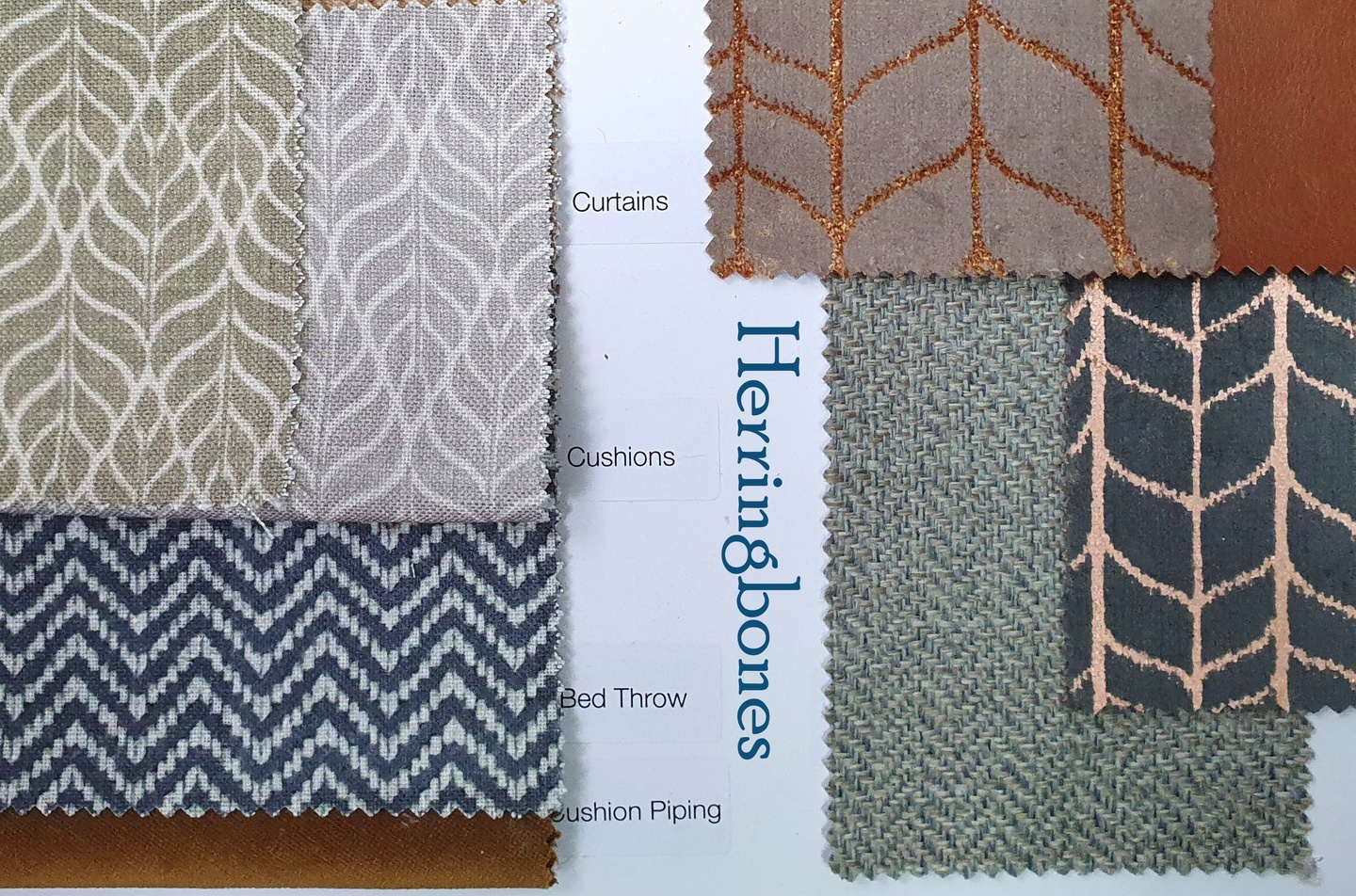
Ultimately, herringbone designs work because they give designers structure without restricting creativity; its familiar rhythm can help connect the different elements of an interior and slow down or speed up the pace in the room, where it matters most.
The Rhythm of a Herringbone: Adding Depth to Hotel Interiors
The herringbone design can be traced as far back as the Romans, when the interlocking paving design cleverly offered stability and structure to Roman road surfaces with the top interlocking layer placed initially on rough or unstable ground. However, looking closer to home and specifically to textiles, dating back centuries, in Irish and Scottish woollens, the herringbone pattern historically signified high-end tailoring, refined taste, and quality, when used in classic outerwear and suits. This association with wool and natural materials still continues today. Visually, it signifies a quiet sophistication: From a distance, it reads as a solid colour, but close up, rather than offering a flat, block colour, it reveals rich texture and multidimensional tone without being loud or overwhelming. The neat Skopos wool-look Herringbone, Slalom, provides this sophisticated natural inspired look for contract furniture pieces.
The broken zig-zag of the herringbone has moved effortlessly through different periods of design, appearing across timber floors, parquet, carpets and tiles.
Unlike a straight stripe, its repeated change of direction encourages the eye to move across a surface, introducing subtle energy. On a hard floor this can help lead the eye through a space; translated onto soft furnishings, the same principle becomes softer and more tactile.
Building layers through textiles in Hotel spaces
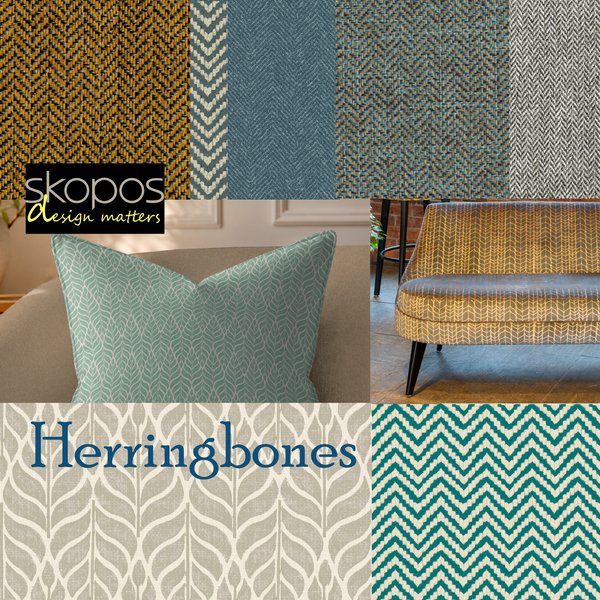
Hotels rarely rely on a single texture or surface. Successful schemes build their character gradually, balancing flooring, wall finishes, furniture, lighting and soft furnishings. Textiles provide an opportunity to introduce another dimension to this layering, particularly when herringbone patterns are used at different scales, wrapped around three-dimensional items, such as furniture, or shown neatly tumbling within the waves of curtain fabric.
The result does not have to be a room filled with matching herringbones. Quite the opposite. Changing scale, colour, construction and interpretation, allows variations of the same familiar geometry to add interest without making an interior feel overly coordinated.
This approach also allows herringbone textiles to sit comfortably alongside other patterns; organic florals, abstract designs and larger feature motifs can provide moments of drama, while a quieter herringbone acts almost as a textural bridge between a plain fabric and a statement design.
Pattern with geometry
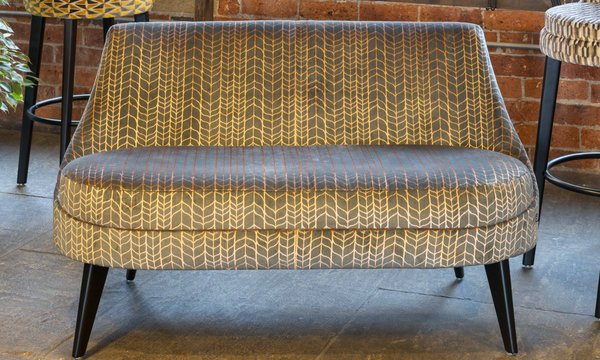
In subdued or tonal colourways, the geometry of a herringbone can become almost architectural, providing detail without visual noise. Depending on the scale and level of contrast however,herringbones can also make a statement, perfect for key elements such as cushions or even carpets.
The Skopos approach to hotel interiors already reflects the importance of contrasting materials and layers in creating rich sensory environments. Designs such as Maranta can be included in a scheme simply for extra tactility and texture. Similarly, Cadiz Herringbone velvet brings elegance and luxury to furniture pieces, with a beautiful herringbone outline in glamorous metallic hues.
Ultimately, herringbone designs work because they give designers structure without restricting creativity; its familiar rhythm can help connect the different elements of an interior and slow down or speed up the pace in the room, where it matters most.